

Yorkshire, famous for its historical significance and beautiful scenery, also boasts a diverse geological legacy that is as diverse as its scenery. With rising construction and infrastructure projects throughout the area, the necessity of accurate subsurface mapping techniques has become more crucial than ever. Ground Penetrating Radar (GPR) surveys have become established as a dominant technology in this field, offering invaluable insights into what lies underneath before excavation begins. From detecting buried utilities to surveying ancient ruins, GPR surveys reveal Yorkshire's geological treasures while promoting safety and efficiency in construction practices.
As urban development continues to unfold in locations such as Leeds, Sheffield, and York, understanding the complexities of the subsurface environment is crucial for project managers and contractors. GPR surveys aid in finding non-metallic pipes and cables but also facilitate compliance with safety regulations and mapping standards, such as PAS 128. By integrating GPR data with other surveying technologies, professionals can reduce dangers associated with underground services, eliminate the risk of hitting utilities, and uncover hidden liabilities. Whether examining the remnants of historical structures or getting ready for upcoming developments, the science of GPR surveys plays a pivotal role in influencing Yorkshire's future while preserving its rich heritage.
Grasping Ground Penetrating Radar Surveys in Yorkshire
Ground Penetrating Radar (GPR) assessments represent vital for obtaining info about the subsurface bypassing invasive approaches. In the region of Yorkshire, these surveys are becoming more prevalent for various applications, like mapping utilities, archaeological studies, and environmental analyses. Through the transmission of radar pulses beneath the surface and analyzing the signals that are reflected, this technology offers highly detailed visuals regarding subsurface structures as well as unusual features.
The use of Ground Penetrating Radar within Yorkshire is especially advantageous in urban areas where established underground systems can create issues for construction and excavation projects. With the ability to locate non-metallic pipes and cables, these scans substantially decrease the potential for utility strikes, thereby ensuring safeguards and preserving project schedules. Furthermore, this technology is useful for locating uncharted culverts and other hidden structures, rendering it invaluable for both new development and remodeling projects.
Since the geology of Yorkshire is not uniform, the efficacy of GPR can be influenced by the types of soil and the moisture levels. Grasping these local factors is crucial to enhance the performance of GPR to guarantee precision in results. Utilizing GPR assessments alongside established methods, the construction and engineering sectors in Yorkshire can realize an extensive perspective of subsurface conditions, enabling better decision-making and the effective execution of projects.
Impacts of GPR in Service Mapping
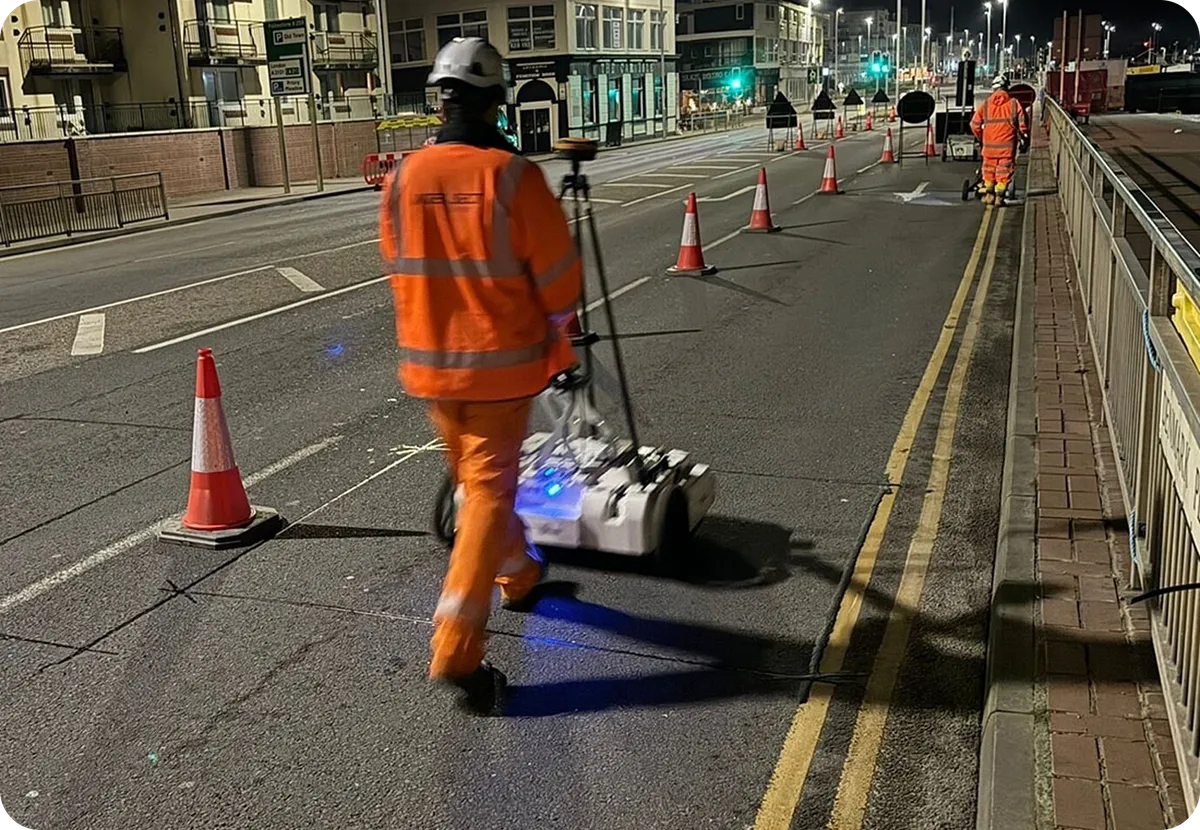
Ground Penetrating Radar (GPR) has changed the way services are located below the surface, providing a non-destructive method to detect buried infrastructure. In Yorkshire, where utility infrastructure is extensive and often outdated, GPR inspections play a crucial role. They permit contractors and managers to map underground utilities without the need for excavation, reducing disruption and making sure that critical services remain operational during construction activities. This capability is particularly beneficial in urban environments, where the risk of harming vital services such as water, gas, and power can lead to expensive delays and unsafe conditions.
One of the major benefits of GPR is its capability to find non-metallic tubing and cables, which conventional electromagnetic detection methods might overlook. This feature is essential for projects on sites with difficult utility networks, as GPR can detect materials such as polymer, cement, and earth. Service mapping surveys using GPR provide accurate visualizations of the depth and placement of various underground assets, which is key for maintaining compliance with safety regulations and standards like PAS 128 in the region. By acquiring why not check here and exact data, teams can organize their digging and building work more effectively while reducing the risk of encountering unrecorded utilities.
Integrating GPR surveys with other technologies, such as terrain mapping and three-dimensional laser scanning, enhances the service mapping process even better. The integration of these methods provides a comprehensive view of the subsurface conditions, allowing for better organization and risk assessment on construction locations. For project managers in the region, this means making educated decisions that fit with both financial and ecological considerations. Ultimately, GPR GPR Surveys Yorkshire improves the accuracy of utility mapping but also contributes to safer, more efficient building practices across the area.
Cost and Factors for GPR Surveys
The cost of Ground Penetrating Radar (GPR) surveys in the Yorkshire area varies greatly depending on the project's intricacy, site conditions, and the level of detail required. Basic assessments may begin at a couple of hundred pounds, but more comprehensive assessments that require higher-level processing and analysis can reach several thousand pounds. Aspects influencing the price include the extent of investigation, the scale of the area to be assessed, and any unique requirements such as adherence with PAS 128 guidelines or thorough reporting.
In furthermore to monetary considerations, several real-world factors should be assessed before conducting a GPR assessment. Site approach is crucial, as hard to navigate or constrained locations can inflate costs and time needed for a successful survey. Weather conditions, such as groundwater levels and soil moisture, particularly in areas with clay soil in Yorkshire, can impact the radar's penetration depth and thus the success of the survey. An skilled contractor will assess these conditions and provide insight on how they might affect both the techniques and cost.
Finally, it is imperative to take into account the long-term value of GPR evaluations when evaluating costs. By preventing damage to utilities, identifying underground voids, and ensuring adherence to regulations, GPR surveys can save significant costs linked to construction delays and unforeseen complications. Investing in a reliable GPR survey also helps in organizing and implementing projects efficiently, thereby enhancing overall site safety and integrity.